

For Canadian artists who tuned into the federal budget announcement on Thursday, hopes for a financial boost may be high.
“In Budget 2026, we are supporting Canadian artists who share our stories,” Prime Minister Mark Carney stated on X, shortly after Finance Minister François-Philippe Champagne unveiled the Canada Creative Credit in the House of Commons.
This tax credit is specifically designed for individuals earning their livelihoods through “original and creative artistic works” within the nation, as outlined in the budget.
“This means that if you are a Canadian artist, you can earn up to $45,000 from your creative endeavors without incurring taxes,” Carney elaborated in his post.
However, how much can artists realistically anticipate receiving? Which artists will qualify for this benefit? And when — if at all — will this initiative take effect?

Canada’s national museums are receiving a $783-million increase in the federal budget over the next five years. Here’s what that could imply for the National Capital Region. The CBC’s David Fraser reports.
What is the Canada Creative Credit?Â
According to the budget, it will likely be structured as a non-refundable tax credit that would “provide tax recognition on up to $45,000 of annual qualifying net business income from original and creative artistic works.”
A non-refundable tax credit represents a fixed deduction from the total income tax owed by an individual at the year’s end, explains Chris Raymond, a tax consultant and content creator.
Essentially, the government calculates your total income tax based on your earnings. The credit is then deducted from that total to lower the amount of tax owed.
What classifies credits like the Canada Creative Credit as “non-refundable” is that they cannot reduce the tax owed below zero. If the credit surpasses your taxes, you do not receive the excess as a refund.
“The taxable income is the figure we actually use to determine how much tax you owe,” Raymond noted. “Once that tax figure is established, that’s when the non-refundable credits come into effect.”
How much money could you get?
Canadians currently benefit from a non-refundable tax credit known as the Basic Personal Amount, which applies to around $16,000 for most income levels.
The Canada Creative Credit would likely bridge the gap between the Basic Personal Amount and the government’s target of $45,000, according to Robert Gillezeau, an assistant professor of economic analysis and policy at the University of Toronto.
“For artists earning, say, $40,000, $50,000, or even up to $100,000, this could significantly alter their income at the end of the year,” he mentioned, noting it could provide several thousand dollars annually for those who qualify.
“It should be a substantial enough incentive to attract individuals to work in this sector who might have otherwise sought employment elsewhere.”
-
FRONT BURNER
Carney’s big federal budget bets
-
Your questions about this year’s federal budget, answered
Nonetheless, this overlooks a potentially significant additional tax source, according to Toronto-based chartered professional accountant (CPA) and content creator Mohammed Al-khooly.
“For someone to genuinely be exempt from taxes on the first $45,000 of income, provinces would also need to introduce a similar credit for provincial taxes,” Al-khooly stated.
“It’s not entirely tax-free. It’s tax-free only for federal purposes.”
Who would be eligible?
This is where the situation becomes complicated.
CPA Sam Cao highlighted that the budget indicates support for young Canadian artists, stating that “Canadian painters, sculptors, ceramicists, writers, musicians, and actors are our storytellers.”
However, the budget lacks a “specific definition” that details which types of artists would qualify. This leaves uncertainty about whether, for instance, a violin instructor or a filmmaker would be more likely to qualify.
“They will likely create some sort of prescriptive list that includes certain professions while excluding others. This process could be somewhat arbitrary,” Gillezeau explained.
“While they mention broad support for creativity and the arts, any form of writing could potentially qualify. If any form of original writing is deemed eligible, the cost of this credit could escalate significantly.”
When asked about a precise definition of eligible artists, a Department of Finance representative directed CBC News to the budget release, indicating that further information would be provided in the spring economic update of 2027.
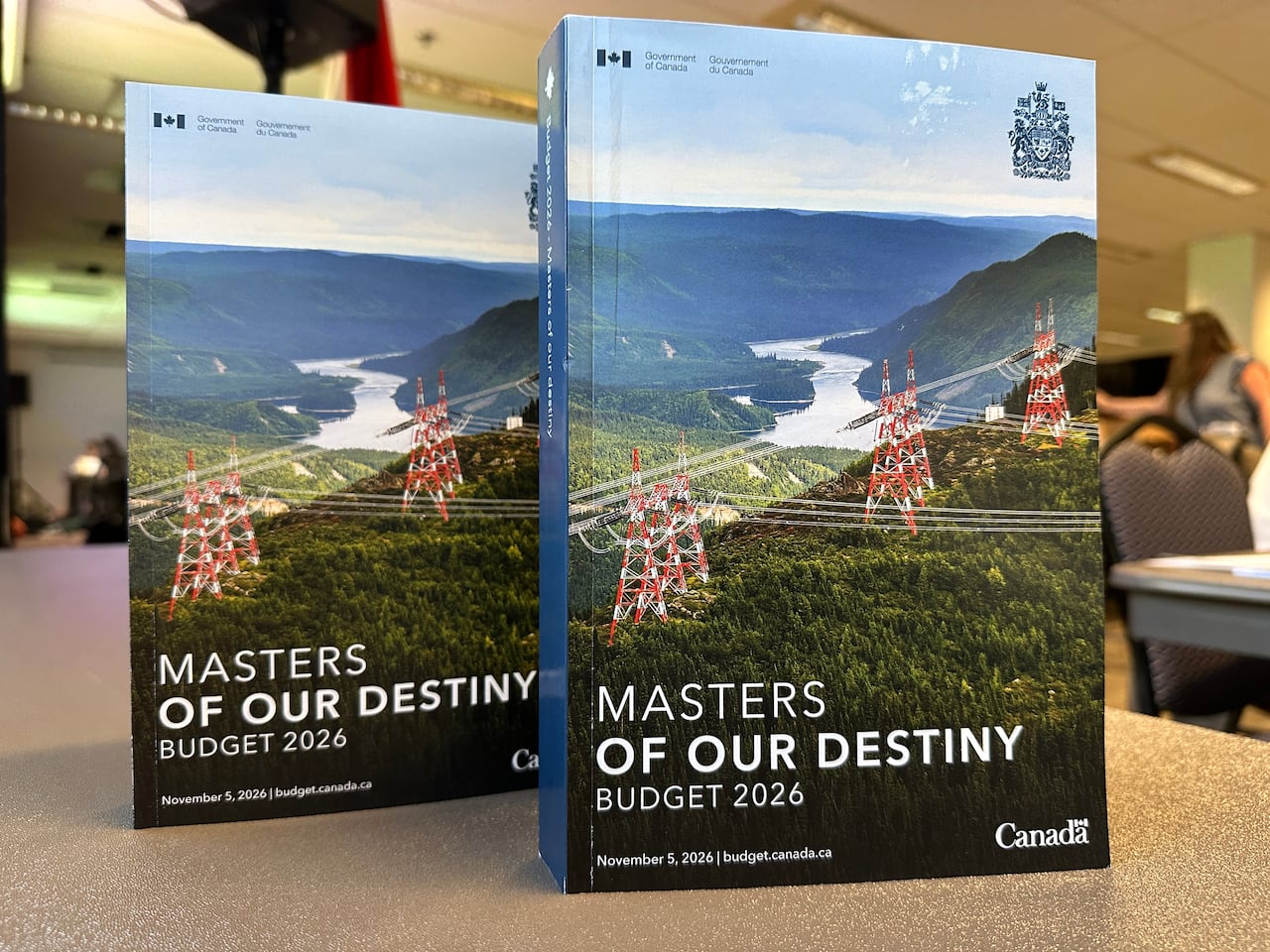
Printed copies of the 2026 federal budget. (David Thurton/ CBC)
How likely is it to happen?Â
The Canada Creative Credit is more of a conceptual proposal than a guaranteed financial benefit, according to Raymond.
“Clearly, the budget has not yet been approved. However, they have not committed to implementing this should the budget pass,” he noted. “What they have indicated is that they have an idea and a framework for how this might function, and they plan to consult with industry representatives about it.”
Canada has other targeted tax credits, such as those for teachers and volunteer firefighters. Still, Cao remarked that if the Canada Creative Credit were to take a form somewhat akin to its current description, it would represent a significant advancement.
“This would likely be the first tax credit of its kind specifically aimed at self-employed individuals through a non-refundable personal income tax credit,” he stated.

Federal Finance Minister Francois-Philippe Champagne joins Matt Galloway the morning after the federal budget. Plus insights from CBC’s chief political correspondent Rosemary Barton.
Gillezeau remarked that tax policies aimed at specific professions are generally viewed unfavorably by economists, likening the potential outcome of the Canada Creative Credit to the “boutique” tax credits of the Stephen Harper era that expanded the tax code excessively.
There are also parallels to the arts subsidies introduced during the New Deal of the 1930s, where the U.S. government funded art for the public good.
What distinguishes this proposal is the intention behind large, profession-specific tax credits for income, Gillezeau stated. However, the specifics of its potential implementation remain largely unknown.
“It’s worth considering [whether] it represents a valuable piece of public policy or not,” he reflected. “However, the actual details of implementation are still far from being established.”