


In the vast African savannah, elephants are found to have a significant impact even after their death, as revealed by a recent study conducted by a global team of scientists in South Africa’s Kruger National Park.
Known for their role as “ecosystem engineers,” elephants influence the environment while they are alive by creating waterholes, altering vegetation, and shaping the landscape. However, the study aimed to investigate whether their impact persists post-mortem.
Lead researcher Courtney Reed, an ecologist, explained that the study, published in the Proceedings of the National Academy of Sciences of the United States of America, aimed to explore how the nutrients from elephant carcasses continue to contribute to the ecosystem even after their death.
Renewal Process
The research team analyzed soil composition, biodiversity, and animal behavior around elephant carcasses, discovering that the decomposition process released a substantial amount of nutrients into the soil. This nutrient influx boosted soil microbial activity, promoting the growth of nutrient-rich plants that attracted herbivores.
The effects of this decomposition process were observed to last for over seven years post-elephant demise.
However, the initial phase of nutrient release resulted in the temporary depletion of vegetation, creating “cold spots” in biodiversity, before the ecosystem gradually recovered.
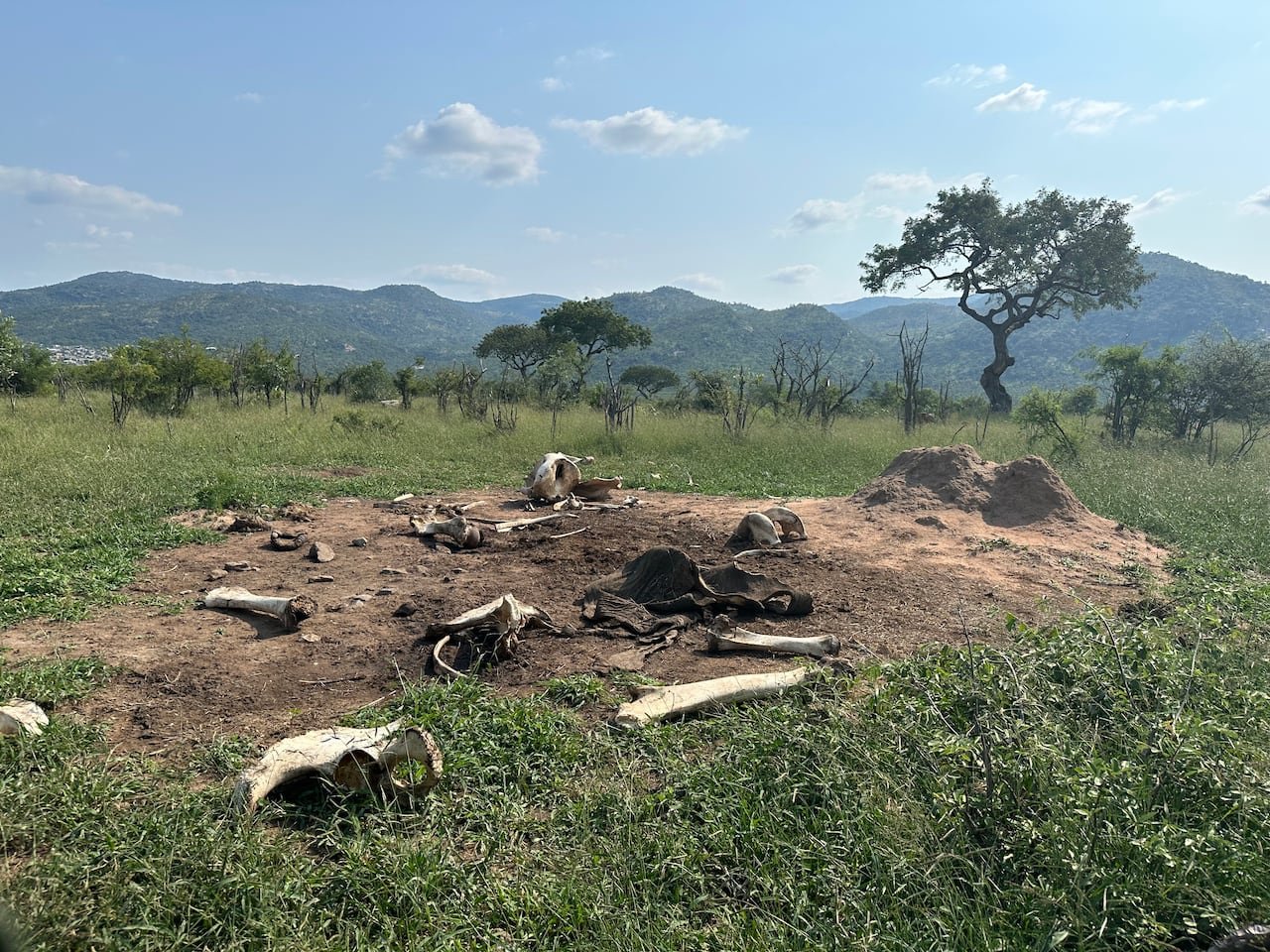
Initially, the nutrient-rich environment from elephant carcasses can lead to sparse vegetation, known as ‘cold spots’ in biodiversity. (Submitted by Courtney Reed)
According to Reed, the ecosystem eventually rebounds as the excess nutrients dissipate, transforming into a nitrogen-rich environment that supports the growth of herbivore-friendly vegetation.
The returning vegetation, abundant in nitrogen, serves as a vital protein source for herbivores like zebra, buffalo, and rhinos, attracting them to the area long after the elephants have