

Officials in northeastern British Columbia are advocating for a new fund to support local communities if the province proceeds with plans for a fourth hydroelectric dam on the Peace River.
On Thursday, B.C. Hydro provided the Peace River Regional District with its initial public update regarding Site E, situated close to the Alberta border to the north of Dawson Creek.
According to board chair Brad Sperling, if the project receives approval, the dam would significantly alter the river system in B.C., resulting in the flooding of additional residents, agricultural land, public parks, and infrastructure such as bridges, while also impacting local water supplies.
“There will no longer be a Peace River,” Sperling remarked. “It will all be reservoirs stretching from here to Finlay Bay.”
B.C. Hydro claims that substantial new sources of reliable power are necessary to accommodate an anticipated 50 percent rise in energy demand by 2050, primarily fueled by industrial expansion.
However, Sperling contends that years of energy development, including the three existing dams on the Peace River and the ongoing establishment of significant wind farms, have already caused enduring effects.
-
Revisiting the Site E dam proposal draws pushback in northeastern B.C.
-
Leaders in northeast B.C. push back against province’s plan to fast track new wind farms
He believes the area deserves a fund similar to the Columbia Basin Trust, a long-term compensation initiative created in 1995 for communities affected by dams on the Columbia River.
Currently, the trust has assets exceeding $1.2 billion, as per recent reports.
“This is being done at the expense of the northeast,” Sperling stated. “The power generated by this area, it’s high time we received a fair economic return for it.”
Legislative changes needed
Currently, Site E is not permitted to proceed under the Clean Energy Act, along with another proposed hydroelectric project on the Homathko River in the Coast Mountains.
Nonetheless, B.C. Hydro representatives indicated on Thursday that they anticipate the provincial government will enact legislative amendments to permit geotechnical and environmental evaluations at both locations.
“While the projects would still be banned from construction, they would allow us to conduct our investigations,” explained B.C. Hydro’s government relations director, Julia Balabanowicz.
“To progress in four or five years, they would need to contemplate whether they want to modify the legislation again to advance the project further.”
-
B.C. Hydro says Site C has cost $14.9B to date as construction winds down
-
B.C. announces 1st battery energy storage project, to be housed on Vancouver Island
Balabanowicz noted that these two hydroelectric initiatives are just some of the many alternatives being evaluated to satisfy future energy requirements, including large-scale battery storage projects.
B.C. Hydro plans to allocate up to $12 million for preliminary assessments of both projects.
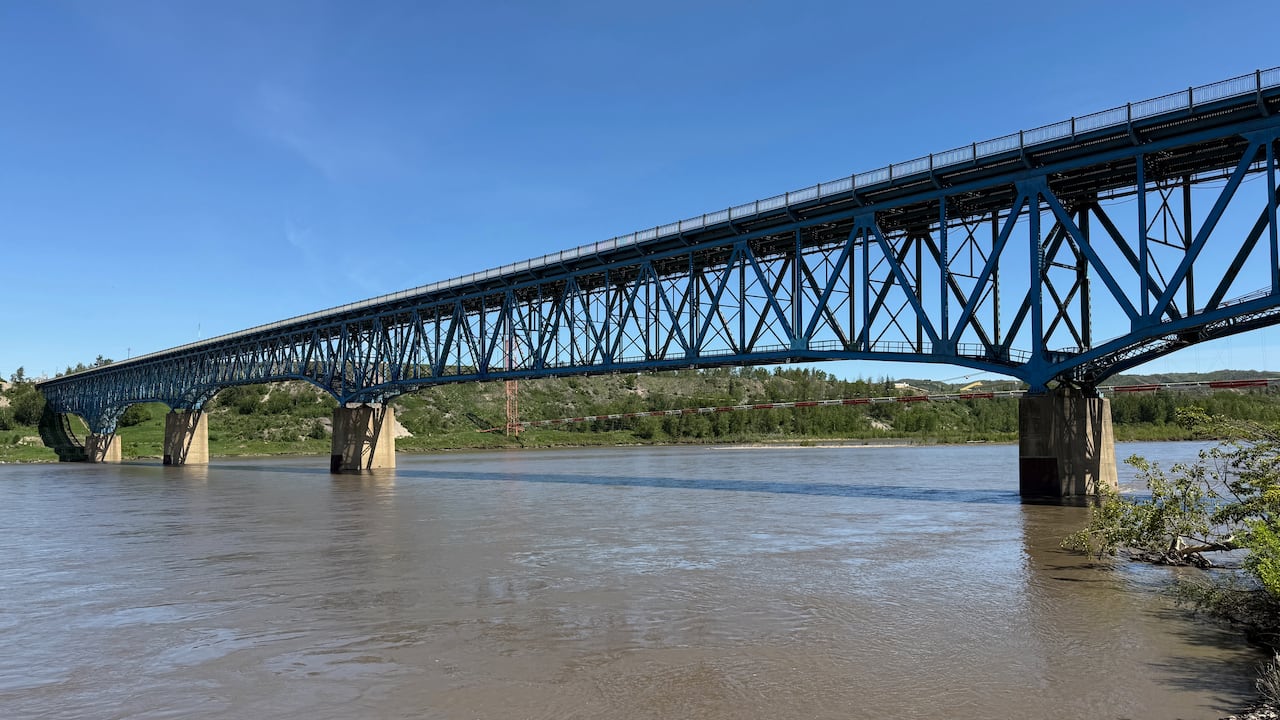
The Taylor Bridge over the Peace River in northeastern B.C. The province is currently studying a replacement for the 66-year-old structure, which would be in the path of the reservoir of the proposed Site E dam. (Tom Summer/CBC)
Residents feel exhausted, mayor says
Other regional leaders voiced similar concerns regarding the necessity for ongoing compensation.
Pouce Coupe Mayor Danielle Veach remarked that the new energy projects are causing an “agricultural squeeze” in the area, which is contending with “some of the most significant capital and infrastructure management challenges in the province.”
“The province keeps coming back, expecting us to continuously sacrifice land and resources,” Veach stated. “What I’m hearing from residents is that they feel worn out and exploited and that their voices are not being acknowledged.”
-
Audio
Calls intensify to replace the Taylor Bridge that connects Fort St. John and Dawson Creek
-
Dawson Creek water pipeline could cost up to $272M to build, new estimates show
Dawson Creek Mayor Darcy Dober expressed concerns about the city’s ability to afford a potential new water supply from the section of the Peace River that would be inundated, with anticipated costs running into the hundreds of millions.
“This could represent a significant legacy for a project of this nature,” Dober noted. “The expenses for us to undertake this are far beyond what we can impose on our residents.”
Other directors suggested the province consider alternative approaches to meet energy requirements, such as nuclear and natural gas options.
“We are observing the construction of nuclear facilities in other provinces. It’s not a trend that will disappear,” said Hudson’s Hope Mayor Travous Quibell, recommending a reevaluation of B.C.’s nuclear power ban.
Subscribe to CBC’s Fort St. John Weekly for a roundup of the best news and stories from B.C.’s Peace and Northern Rockies.

Tag: rewrite-pending