

THE LATEST:
- Residents in some parts of Summerland can return home following the partial downgrade of an evacuation order to an evacuation alert.
- Numerous properties have been removed from evacuation orders in the vicinity of the Pear Lake wildfire, including the entire Village of Clinton.
- Evacuation orders affecting all properties in Peachland and Electoral Area West have been updated to evacuation alerts.
- For properties around the Quilpituk Creek wildfire, evacuation orders from Cinnabar Creek to Westshore Estates have also been adjusted to an evacuation alert.
- The B.C. Wildfire Service (BCWS) reports that over 100 wildfires are still active across the province.
- As of Friday morning, approximately 18,900 individuals remain under evacuation orders, with an additional 10,000 on evacuation alerts in B.C.
Evacuees Return
On Friday, thousands of B.C. residents who evacuated their homes due to wildfires will be allowed to return, as some evacuation orders have been converted to alerts.
In Summerland, where the Bald Range wildfire is ongoing, the District of Summerland has changed part of its evacuation order to an evacuation alert. The district’s mayor announced that residents from around 400 properties located in the Trout Creek neighbourhood, east of Highway 97, can head back home.
On Friday evening, evacuation orders for all properties in Peachland and Electoral Area West were downgraded to alerts, as stated by the Central Okanagan Emergency Management.
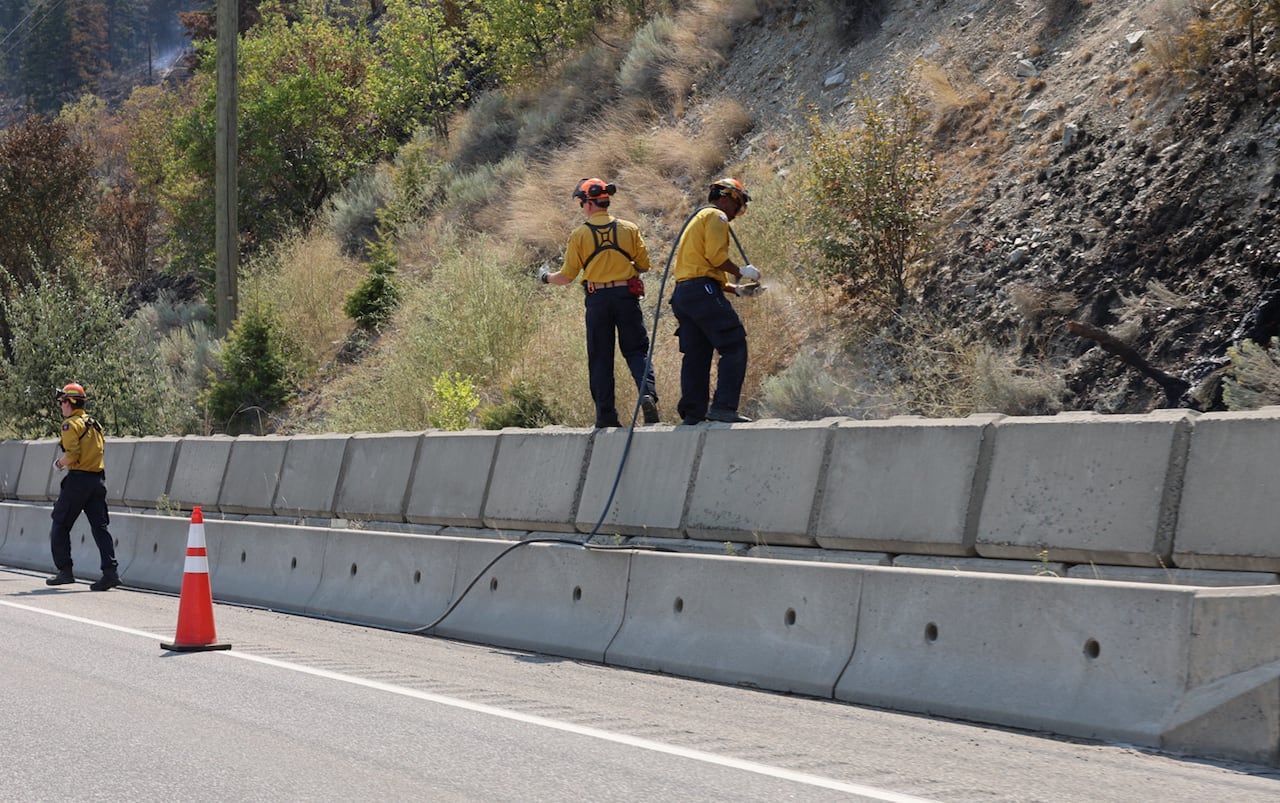
Firefighters from the B.C. Wildfire Service work near Summerland on Thursday. (Deanna Dunham/The Canadian Press)
Additionally, more than 400 properties in the Pear Lake wildfire area, including the full Village of Clinton, were also removed from evacuation orders on Friday evening.
Instead, these properties will be under an evacuation alert, and the Thompson-Nicola Regional District (TNRD) announced that evacuees will start returning to the area from Saturday at 8 a.m. PT.
Clinton Mayor Roland Stanke informed CBC’s Radio West that evacuees should be prepared for altered surroundings due to the fire, estimating that around 100 homes have been destroyed in the blaze.
“There has been significant devastation. Many structures and homes have been lost,” he remarked.
A phased re-entry process will also be implemented for evacuees impacted by the Quilpituk wildfire, situated north of Kelowna, as evacuation orders are downgraded to alerts. An emergency operations centre representative stated that this change affects approximately 2,400 households.
An evacuation alert in the region has also been lifted.
Central Okanagan Emergency Management indicated Friday morning that residents will regain access in phases to “facilitate an orderly return home and manage traffic flow.”
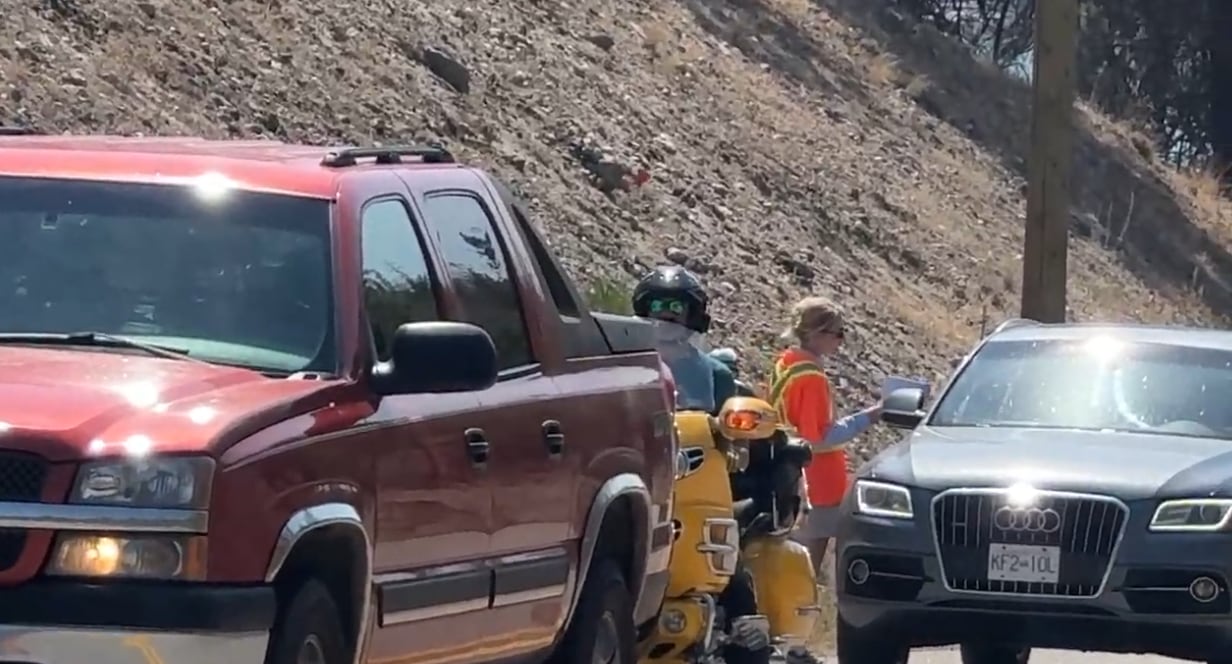
Evacuation orders were partially downgraded to alerts around the Quilpituk Creek fire, and residents are returning in a staggered manner to reduce traffic issues. (Brady Strachan/CBC)
Residents are encouraged to check their properties and trees for any damages or problems prior to re-entering their homes.
“Currently, we advise people to dispose of all contents in their refrigerators and freezers,” said Kari O’Rourke from the regional district, mentioning that a re-entry guide will provide instructions on handling garbage for returning evacuees.
No structural losses have been reported, according to the emergency management website.
The Quilpituk Creek fire was downgraded from being out of control to being held as of Thursday.
Calls for patience near Bald Range fire
The Regional District of Central Okanagan (RDCO) is urging residents who had to evacuate due to the Bald Range wildfire to remain patient.
As of Friday around noon PT, the fire had spread over 198 square kilometres, according to the BCWS.
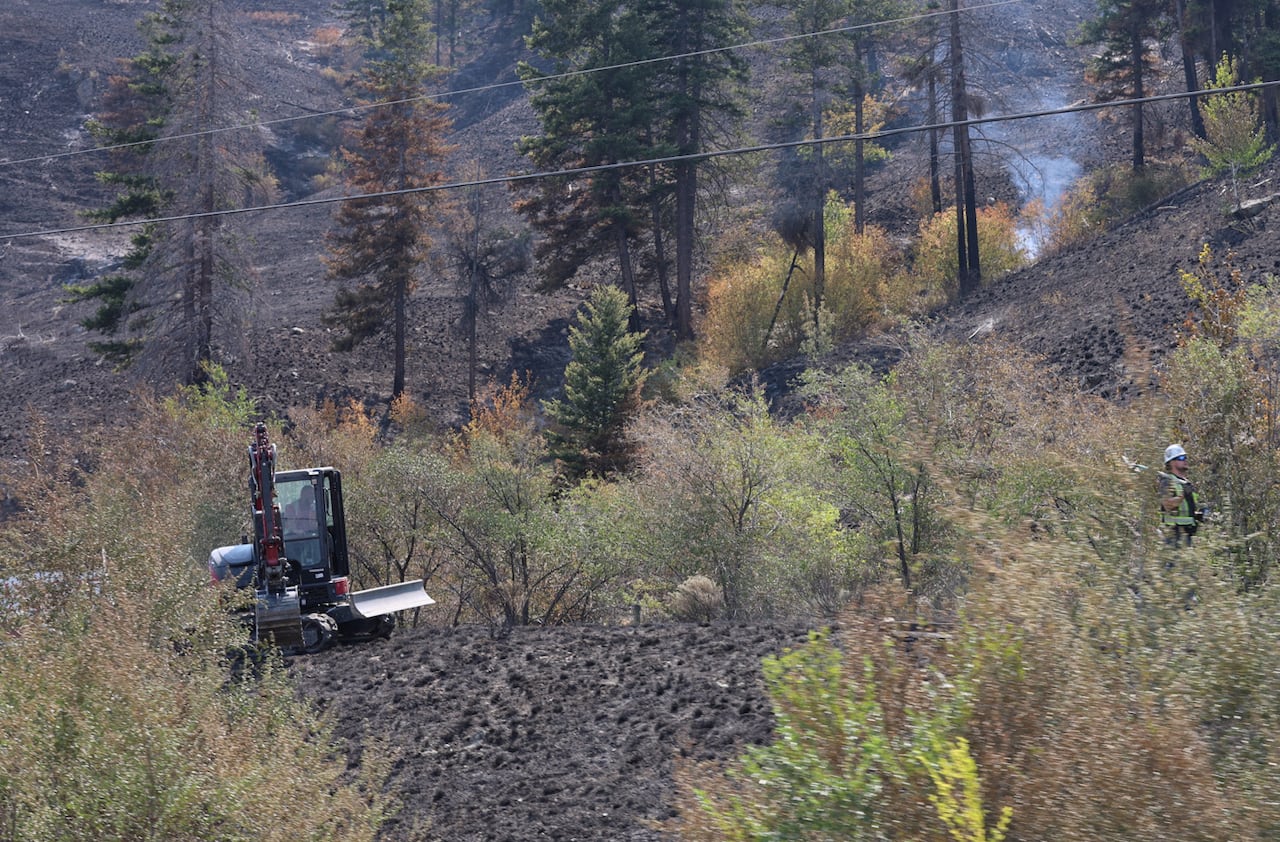
Fire crews work to extinguish spot fires close to Summerland on Thursday. (Deanna Dunham/The Canadian Press)
While the RDCO indicates that some evacuees may not experience significant fire activity near their communities, the situation could change quickly.
“Increased fire behavior is possible today as clearer skies allow more direct sunlight to reach fuel sources,” the BCWS noted in a Friday morning update. “This added heating could escalate fire intensity, potentially allowing flames to reach the crowns of trees.”

Mayor Doug Holmes of Summerland stated that district officials have completed most of their re-entry preparations, and evacuees will return in a phased manner once the BCWS gives the all-clear signal.
“The positive aspect for Summerland is that the fire seems to be moving away from the town,” he mentioned regarding the fire on Thursday evening.
“This is not as favorable for those residing in the fire’s path — but for us, it’s a positive development.”
Premier David Eby previously indicated that specialized search-and-rescue teams are being sent out to assess the damage, which has also occurred in the Quilpituk Creek fire area in the Okanagan.
As of Friday afternoon, there are over 110 active wildfires in B.C.
The largest wildfire remains the Pear Lake wildfire near Clinton, which has spread to an area of 1,574 square kilometres as of Friday afternoon.
In the Fraser Canyon, the Brunswick Creek fire complex around Boston Bar has affected more than 700 square kilometres.
Highways and Air Quality
Highway 97 reopened on Thursday with limited daytime access, according to DriveBC, although officials warn that conditions on the highway can change quickly, and stopping is prohibited.
The section between Peachland and the Pyramid Picnic Area in Kickininee Provincial Park had been closed due to the Bald Range wildfire.
-
Members of Okanagan Indian Band mourn loss of forests and irreplaceable artifacts in wildfire
-
Wildfire near Summerland threatens mountain goats living on nearby cliffs
Other closures to Highway 1 north of Hope and Highway 97 north of Cache Creek remain active.
However, the TNRD noted in its update regarding the downgraded evacuation order in Clinton that Highway 97 is expected to be fully reopened by noon on Saturday.
Air quality warnings were issued for many regions in southern B.C. on Friday, indicating high health risks due to wildfire smoke.
An orange air quality warning, which signifies a very high health risk, was implemented for the Fraser Valley on Friday afternoon.