

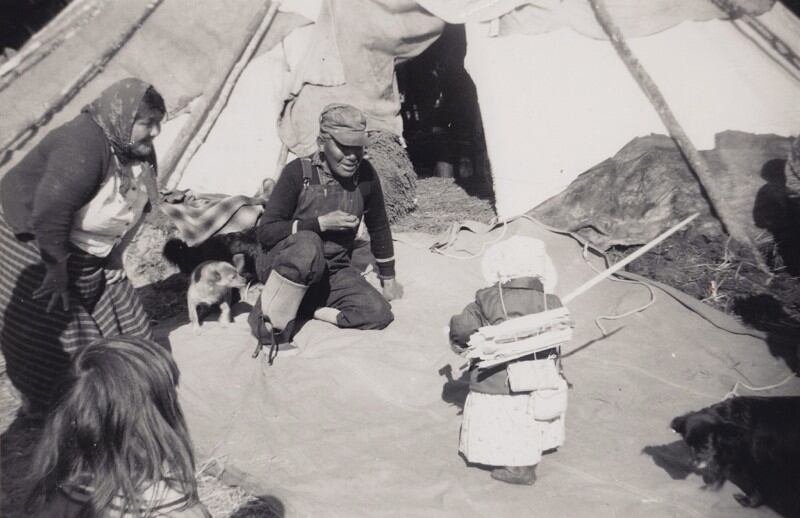
Long before the advent of modern amenities like running water, electricity, and roads, Cree families relied on traditional methods of survival. They fetched water from nearby streams, heated their log cabins with wood, and hunted for food to sustain themselves.
Over 50 years have passed since the historic signing of the James Bay and Northern Quebec Agreement (JBNQA), a pivotal moment that transformed life in Eeyou Istchee. Reflecting on the pre-agreement era, two Cree leaders, Bertie Wapachee and Gordon Blackned, shared insights into the transition from traditional living to modernization that occurred during their childhood in the early 1970s.
Gordon Blackned, now 74 years old and hailing from the Cree Nation of Wemindji, expressed hope for the future, emphasizing the importance of preserving Cree language, land, and identity in the upcoming decades.
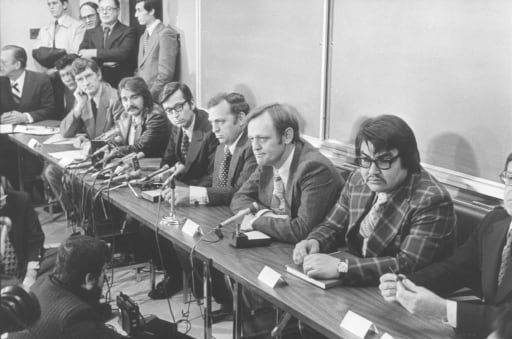
The JBNQA, signed in 1975 among the Cree, Inuit, Quebec, and federal governments, emerged in response to opposition against a large hydroelectric project in northern Quebec. This groundbreaking agreement acknowledged Indigenous land rights, granted self-governance, and provided compensation, marking Canada’s inaugural modern treaty and setting a precedent for future accords.
Blackned’s childhood was immersed in the wilderness, living with his family in a log cabin on their trapline until the age of eight. During the three seasons spent there annually, they resided in tent frames and wigwams, only returning to what is now Wemindji during the summer months.
Recalling the early signs of modernization, Blackned reminisced about the unfamiliar sight of houses being constructed in Waskaganish in 1975 for community members, symbolizing a shift towards a more urban lifestyle.
Since the agreement’s inception, the Cree communities have made significant strides in various sectors including self-governance, economic development, healthcare, education, justice, and land rights across all ten Cree communities.
Although life has become more convenient for the Cree, Blackned, who dedicated his career to the Cree School Board, expressed concerns about the diminishing knowledge of language and traditional skills among younger generations.
Emphasizing the importance of passing down ancestral wisdom, he stressed the necessity of educating young individuals on their history, traditions, values, and survival skills inherited from their ancestors.
For many Cree individuals, preserving cultural heritage is not merely a reminiscence of the past but a crucial aspect of instilling values that have historically shaped their way of life.
As societal norms evolve and external influences grow, maintaining these foundational values poses a challenge in the modern era.
Bertie Wapachee,