

Sharon Kabanak acquired traditional knowledge from her mother, mentors, and community elders.
Now, her goal is to ensure that this wisdom endures long after she is gone.
As a member of the Kluane First Nation, she conducts workshops where she imparts traditional art skills and knowledge to children, families, visitors, and individuals from various cultures.
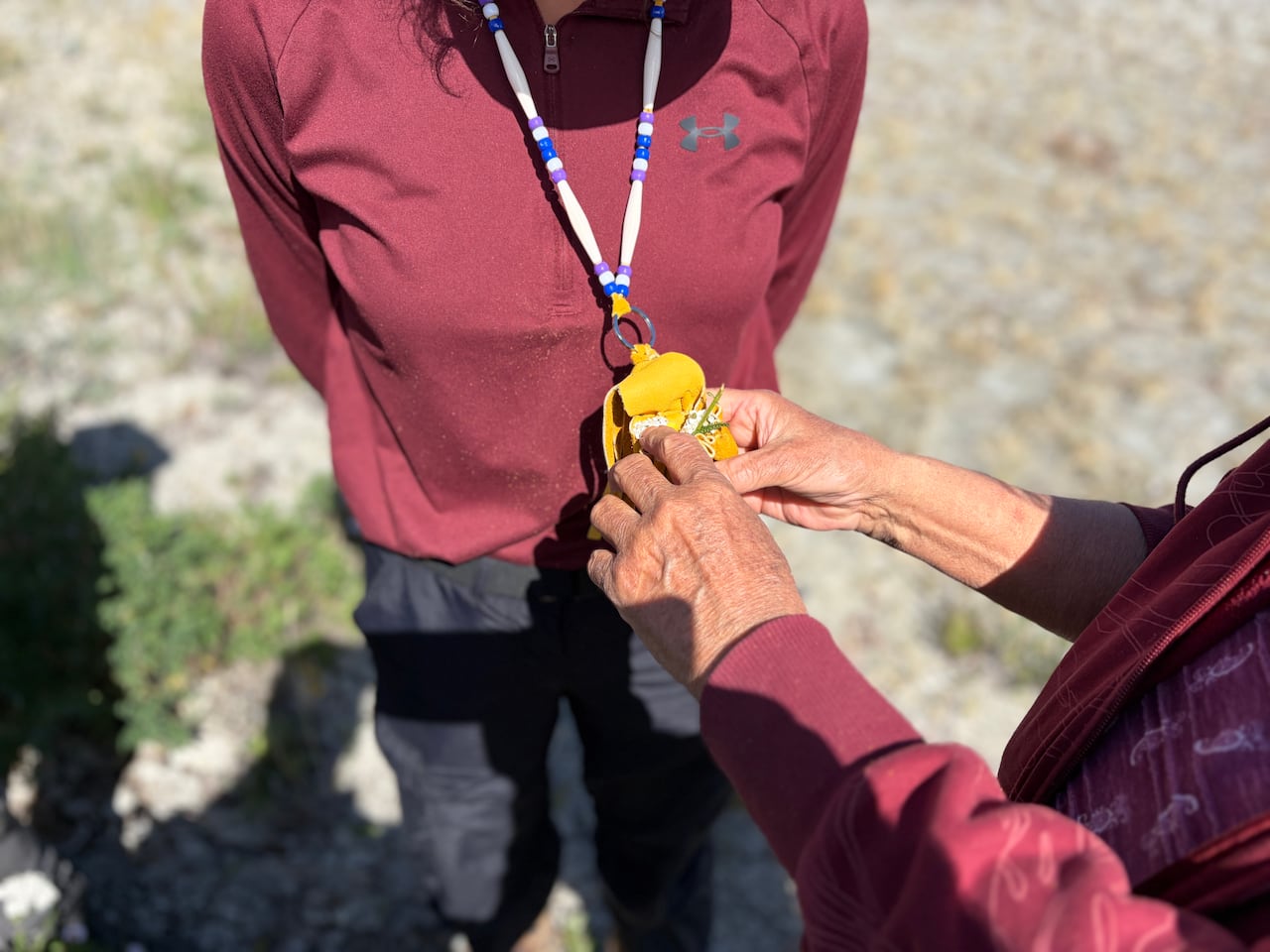
Kabanak places yarrow (Achillea) into a medicine bag crafted by master’s student Marilou Roy after a traditional arts workshop near Thechàl Dhâl’ Visitor Centre outside Haines Junction, Yukon. (Viktor Elias/CBC)
During a recent workshop held at Thechàl Dhâl’ Visitor Centre, a collaboration space for the Kluane First Nation and Parks Canada located near Silver City, north of Haines Junction, Yukon, Kabanak guided participants in creating necklaces and medicine bags using beads and plastic bone-shaped pieces influenced by traditional designs.
For Kabanak, crafting by hand is just one aspect of the experience.
“It’s a learning journey to connect with the land,” Kabanak stated.
She has dedicated years to working with traditional foods, medicines, languages, and arts, noting that much of her knowledge was passed down from mentors and elders in Alaska, along with her mother. These teachings include the respectful treatment of animals and materials sourced from nature.
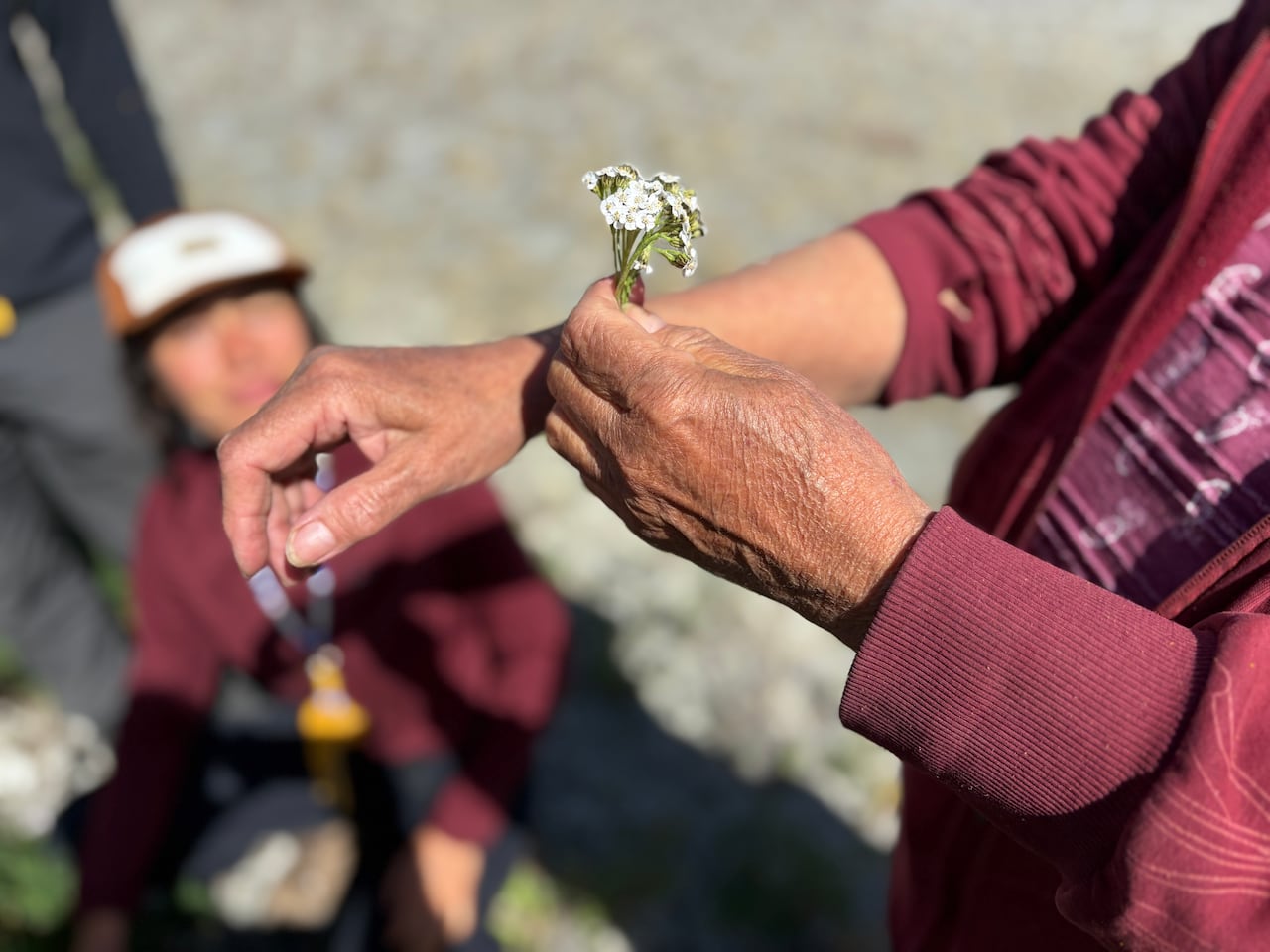
Kabanak educates visitors about local plants and their traditional applications as part of her mission to impart Indigenous knowledge to younger generations and individuals from other cultures. (Viktor Elias/CBC)
She believes that sharing these teachings offers younger individuals chances to learn through observation and participation.
“Don’t let your life be idle… Life isn’t solely about electronics,” Kabanak remarked.
“You can also uphold traditions and take pride in recognizing the people and ancestors who came before us.”
Kabanak noted that children retain memories of their past experiences—whether it’s learning to cook, crafting a birch basket, or spending time in nature.
“If you’re actively engaged, they observe what you’re doing. Then they will emulate it because they learn best when they are young,” she explained.
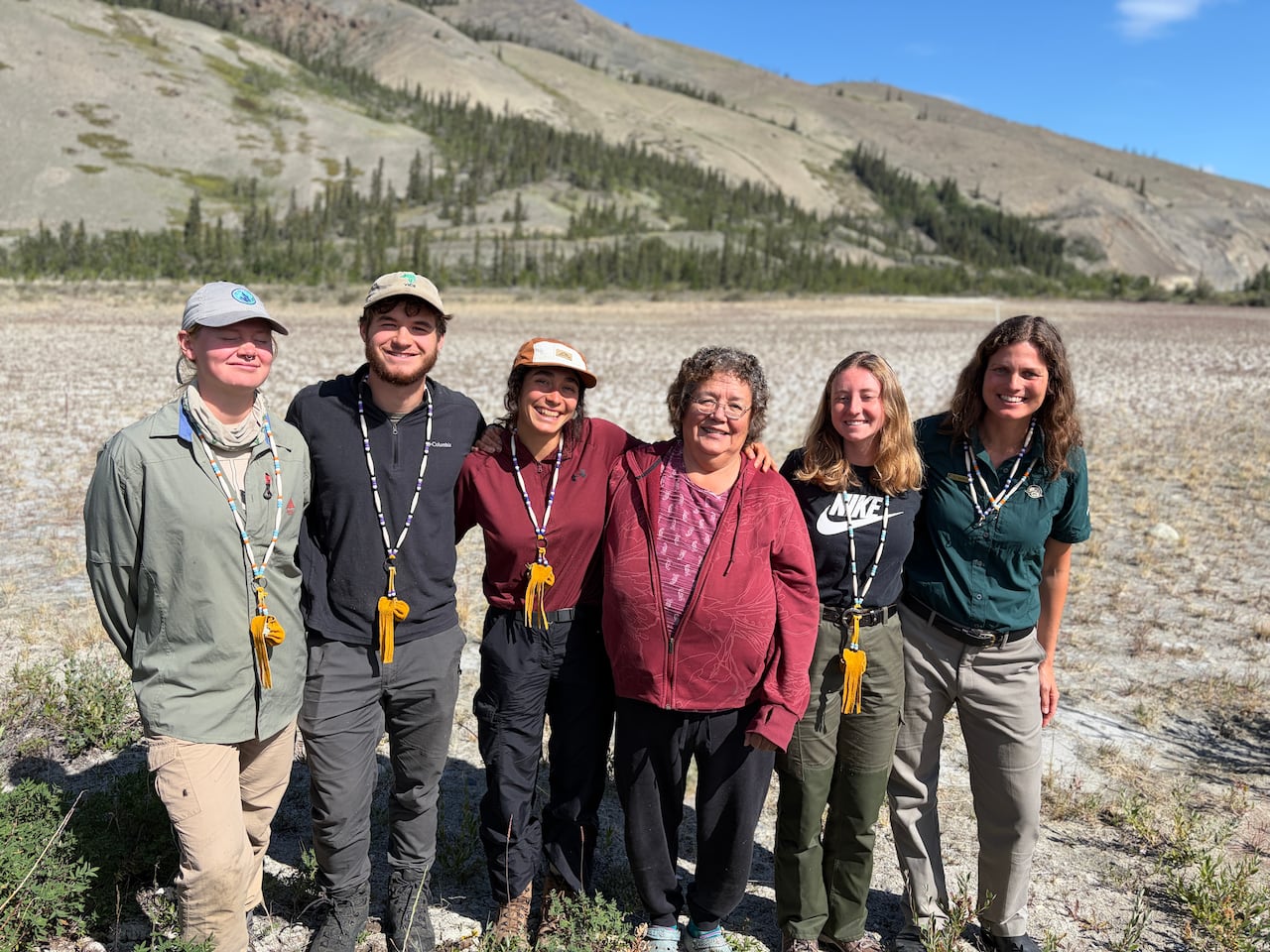
From left to right: Ecology undergraduate students Shiraz Elska and Aidan Russell, master’s student Marilou Roy, Sharon Kabanak, exchange student Manon Hernu, and Parks Canada interpretation coordinator Katarina Welsch, gathered outside Thechàl Dhâl’ Visitor Centre near Haines Junction, Yukon, after participating in a traditional arts workshop led by Kabanak. (Viktor Elias/CBC)
Kabanak’s method goes beyond merely transferring knowledge from one generation to another. She views sharing traditional practices as a means to connect with individuals from diverse backgrounds.
This was evident at a recent workshop, where participants included researchers and students from Quebec, France, and the United States. Kabanak has also drawn insights from her experiences abroad, where she encountered cultures that utilized art and handmade items as a means to convey knowledge.
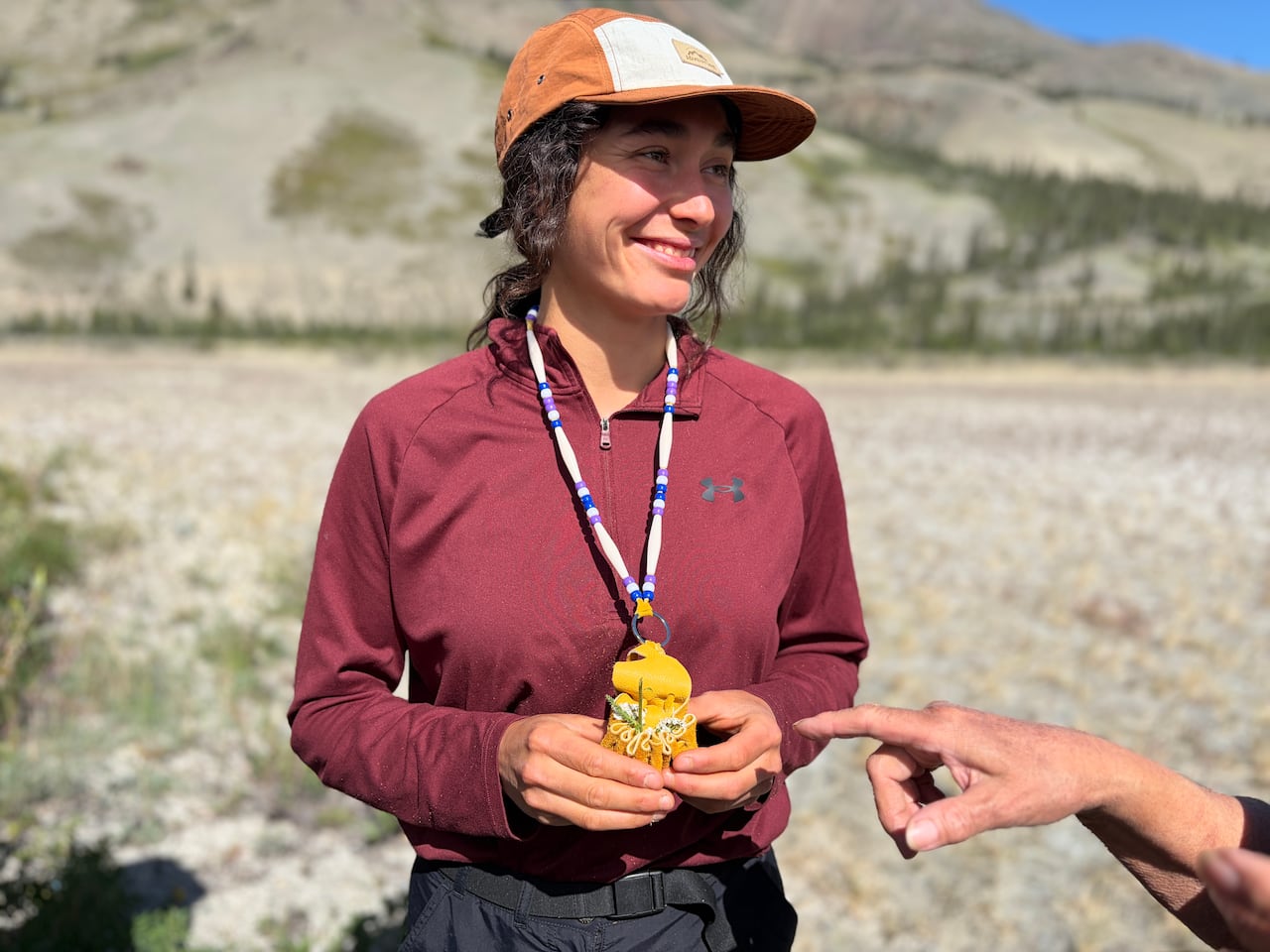
Master’s student Marilou Roy wearing the necklace and medicine bag she created during a traditional arts workshop led by Kabanak. Roy is conducting research in the Yukon as part of a project focusing on berries and wildlife. (Viktor Elias/CBC)
Marilou Roy, a master’s student from Quebec researching wildlife in the Yukon, stated that these interactions have influenced her perspective on her own research.
She mentioned that learning from Kabanak has deepened her understanding of the relationships between wildlife, plants, people, and the broader boreal forest ecosystem.
“It’s rewarding to… gain a clearer understanding of the wildlife I am studying and how everything interconnects in our work,” Roy noted.
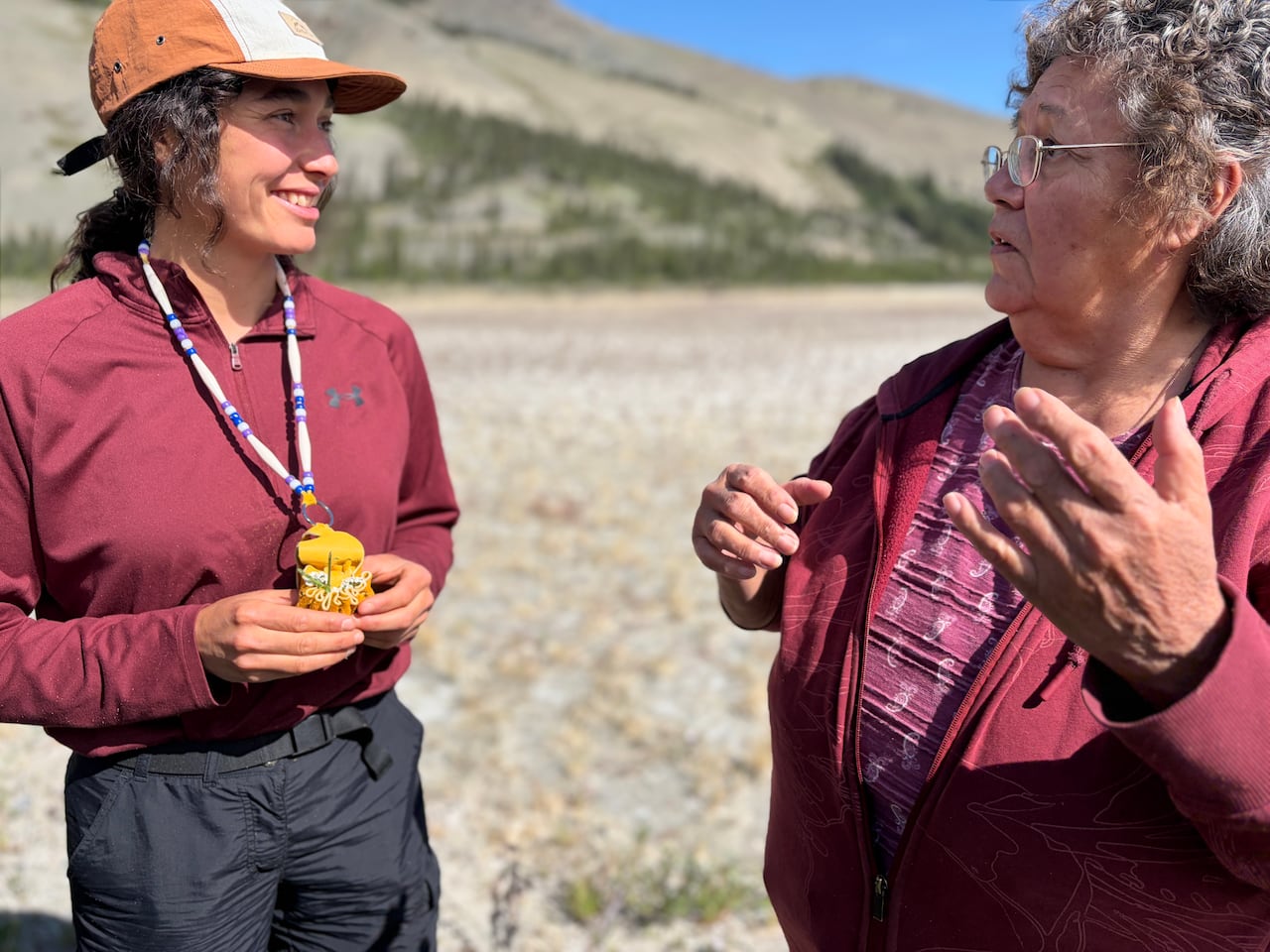
Roy, left, attentively listens as Kabanak imparts traditional knowledge regarding the plants located near Thechàl Dhâl’ Visitor Centre outside Haines Junction, Yukon. (Viktor Elias/CBC)
For Kabanak, this is the essence of her mission.
While the necklace or medicine bag might eventually be completed, she aspires for the knowledge linked to these creations to continue being shared among individuals.
“Your journey does not conclude with your sharing,” she emphasized. “You’re sharing with your community and the land.”